Connecticut Party Rentals · Tent education
Not All Tents Are the Same
A cheap canopy may look fine in a video. A professional event tent is built to protect the event.
Same size does not mean same tent. If you have seen bargain tents on Facebook, TikTok, Amazon, Walmart, or a local classified, this page explains what you are actually comparing—and when a simple canopy is honestly enough.
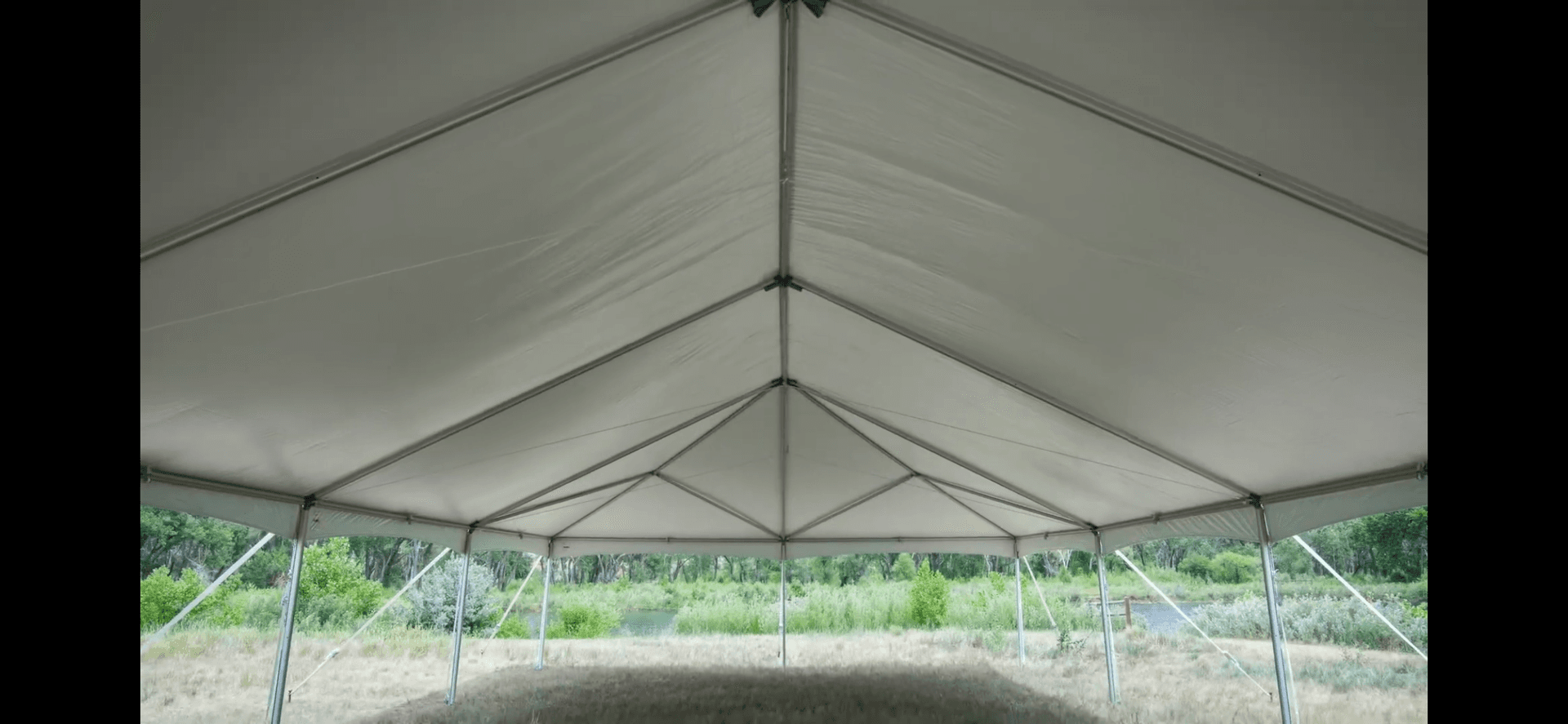
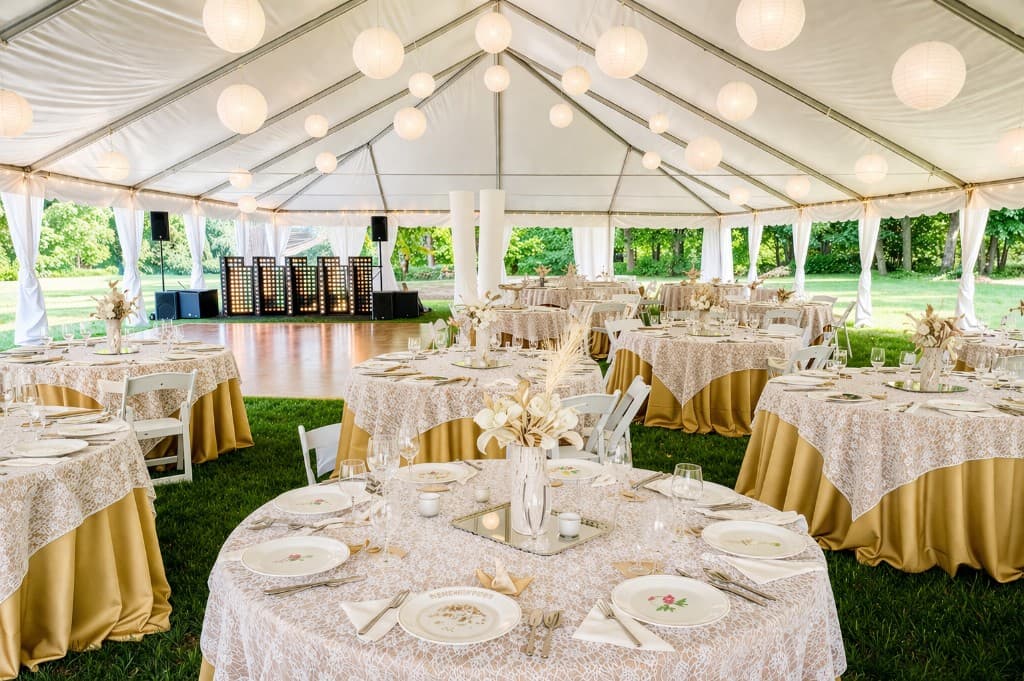
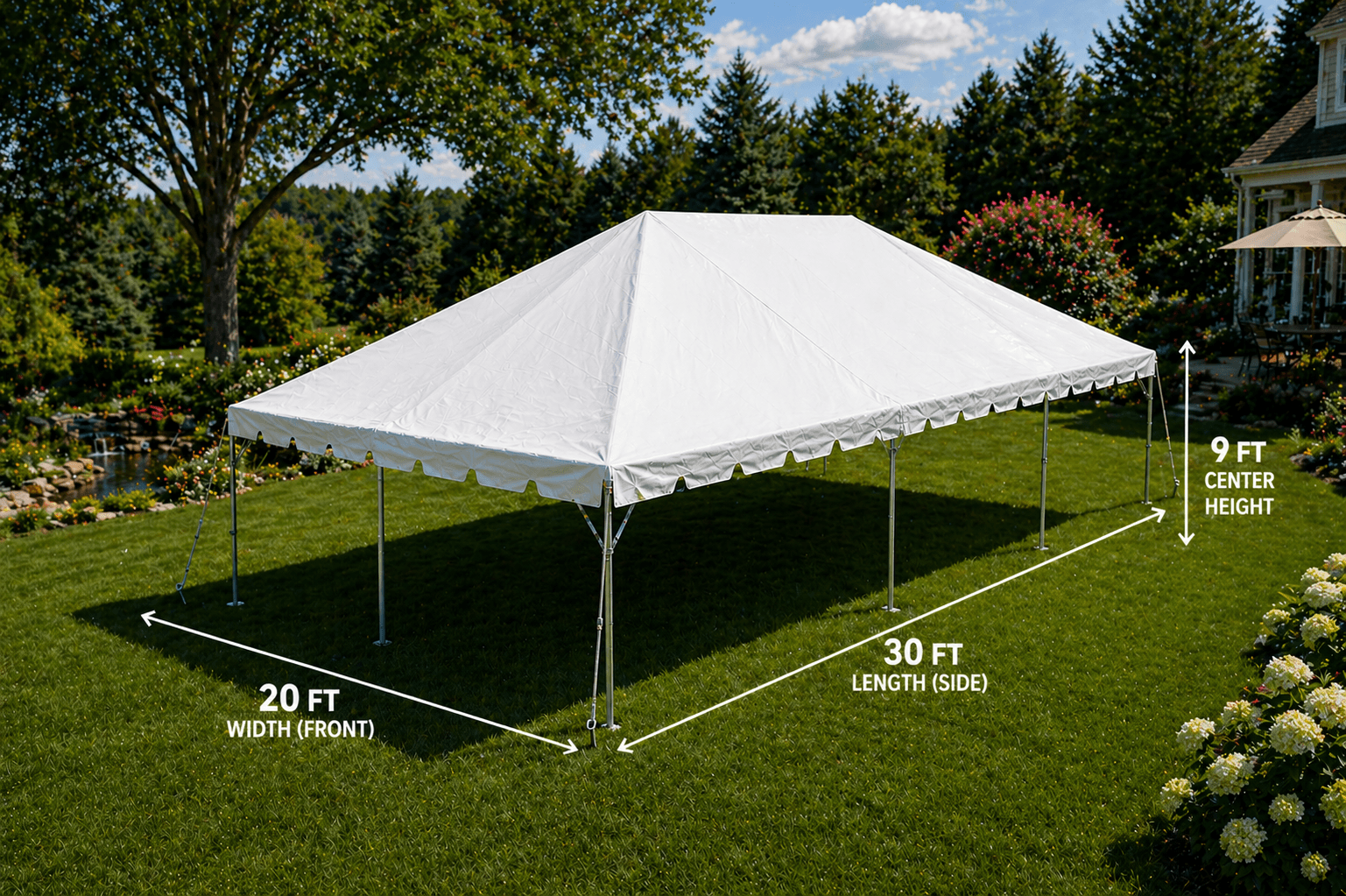
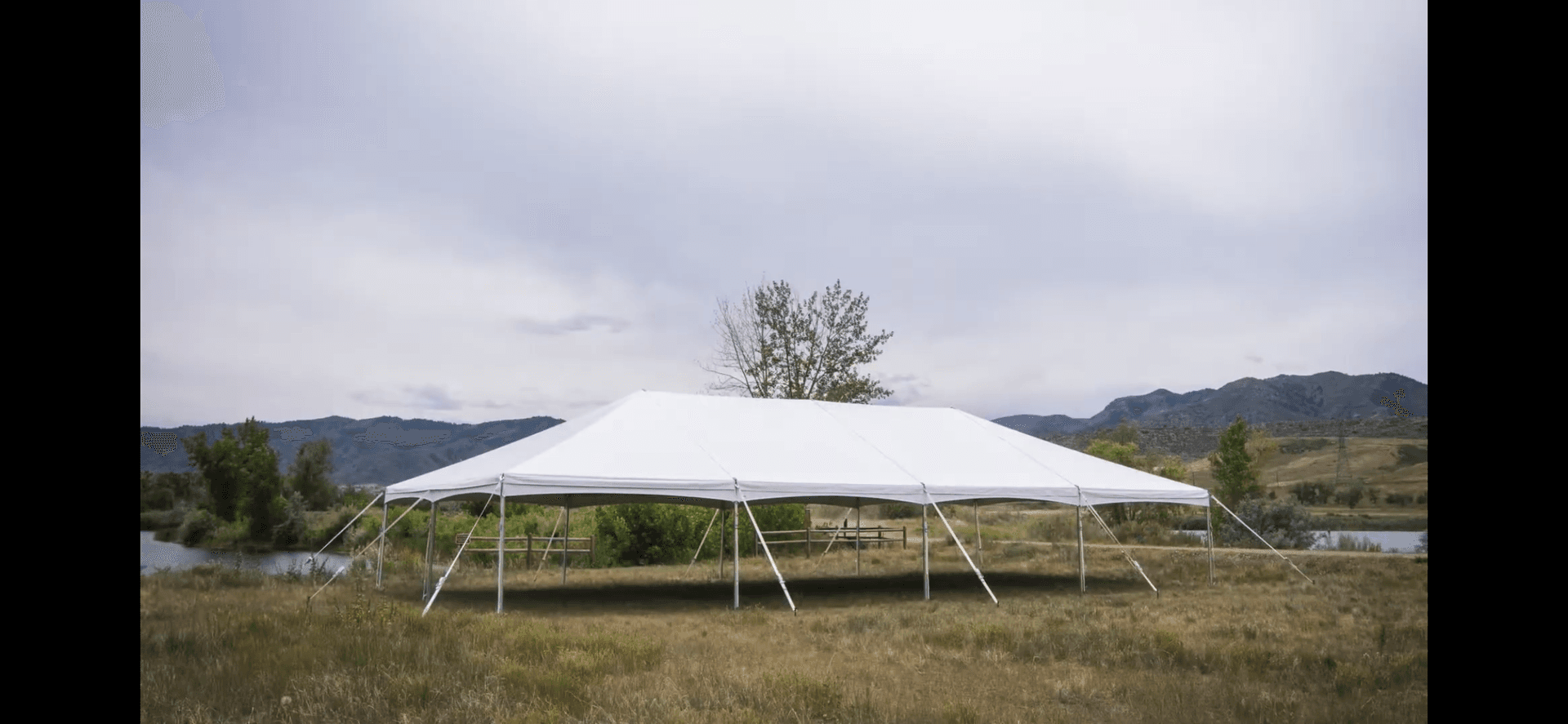
A liner can make a cheap tent look nice. It cannot make it strong.
Social clips often show string lights, drapes, and liners first. That is fair staging—but it can hide a light frame, thin legs, and hardware that was never meant for a full guest load or a gusty afternoon. A liner can make a cheap tent look pretty, but it cannot make it strong.
When you are shopping, ask what is underneath the styling layer. The structure, anchoring plan, and wind rating matter more than how the fabric photographs at golden hour.
Same size, very different tent
Footprint is only one line on the spec sheet. Engineering, anchoring, weather handling, and crew experience change what “10×20” or “20×40” actually means on your lawn or lot.
| Topic | Pop-up / budget canopy | Professional frame / event tent |
|---|---|---|
| Frame & hardware | Lightweight tubes; built for portability, not load. | Engineered aluminum or steel systems sized for wind and span. |
| Anchoring | Often weight bags or minimal stakes—easy to under-spec. | Staking or ballasting planned for surface, exposure, and code context. |
| Weather | Rain and sidewalls are often add-ons; sealing varies. | Sidewalls, gutters, and rain plans integrated with layout. |
| Guest experience | Shade over a small zone; headroom and aisles can feel tight. | The tent is not just the roof. It is the room your guests are sitting in. |
| Setup & support | DIY assembly; little planning help if weather shifts. | Professional delivery, install, and strike with layout guidance. |
When a cheap canopy may be fine
We are not here to shame a pop-up. For basic shade, a canopy may be enough. For real events, choose a real event tent.
- Grill or smoker shade with a small footprint and low guest load under it.
- Vendor booth or registration table where the manufacturer rating matches the exposure.
- Short check-in windows, hydration tables, or equipment cover away from the main crowd.
- Kids’ game station or craft table with clear adult supervision and conservative wind planning.
Where cheap tents become risky
Wind does not care about your RSVP count. When a frame is under-built, sidewalls are loose, or anchoring is improvised, the tent can move, pool water, or fail in ways that interrupt the event and create safety issues. None of that shows up in a fifteen-second clip.
Professional crews think in terms of exposure, guy lines, ballast, transitions to pavement, and how guests will move in rain—not only how the top looks on install morning.
Why professional frame tents cost more
You are paying for commercial-grade inventory, trained install teams, and the planning that keeps dinner, dancing, and exits working when the forecast shifts. That includes anchoring math, appearance on camera and in person, documentation when a venue asks for it, and accountability if something needs adjusting on site.
Cheap tents cover space. Professional tents protect the event.
Homeowner & event host responsibility
If a tent is poorly secured and someone is hurt, property is damaged, or an insurer asks questions after the fact, the homeowner or host is often part of the conversation—along with vendors, venues, and weather decisions that day. This is general education, not legal advice. When in doubt, choose equipment and a crew that match how many people you are inviting, how long they will be under cover, and what your venue expects on paper.
How to compare tent quotes the right way
Use the same questions for every bidder so you are not comparing a photo price to a full event plan.
- What exact tent model or system is quoted, and is it engineered for my guest count and wind exposure?
- How will you anchor on my surface (grass, patio, asphalt mix) and who signs off on that plan?
- What is included for rain—sidewalls, gutters, doors, weights, stakes—and what is extra?
- Who installs, who strikes, and what happens if the schedule shifts?
- Is delivery, pickup, and labor itemized so I can compare apples to apples?
- Will you help with layout for tables, buffet, dance, and aisles—or only drop off equipment?
Our approach
Connecticut Party Rentals is a Connecticut event rental company. We help hosts pick the right tent for backyard parties, graduations, weddings, corporate programs, schools, festivals, and community events—then we deliver, install, and pick up with the same crew standards we use statewide. If a canopy honestly fits your plan, we will say so. If your guest list and weather story call for a frame tent, high-peak line, or larger clear-span structure, we will walk you through why, without pressure.
Further reading: Frame tent vs. pole tent in Connecticut · How tent rental pricing works · Tent gallery
Questions hosts ask
Are cheap pop-up canopies always bad?
No. They are useful for light-duty shade and short windows when exposure is modest and anchoring is done carefully. Problems start when they are asked to behave like a full reception shell.
Why does a professional frame tent cost more than a canopy?
Materials, engineering, inventory maintenance, insurance, trained labor, and planning time are all part of the quote. You are renting structure and service—not only fabric over a rectangle.
Can two tents be the same size but totally different?
Yes. Same size does not mean same tent. Span, wind rating, anchoring, sidewall options, and interior height can all differ while the footprint looks similar on paper.
Why do cheap tents look good on TikTok or Facebook?
Lighting, liners, and camera angles flatter lightweight frames. Look for close-ups of legs, connectors, and how the tent is tied down—not only the wide glamour shot.
Is a tent liner the same as a better tent?
No. Liners change the look and feel inside. They do not replace frame strength, anchoring, or weather sealing.
Are cheap canopies dangerous?
They can be if they are under-anchored, overloaded with guests, or used in weather they were not built for. Risk rises when expectations exceed the product’s design.
Can the homeowner be liable if a tent fails?
Liability is fact-specific and may involve hosts, vendors, and venues. We are not attorneys—choose reputable equipment and documented install plans, and involve your venue or insurer early when they require it.
Do I need a permit for a tent in Connecticut?
It depends on town, footprint, occupancy, duration, and venue rules. Fire marshals and building departments set thresholds in many places. Ask locally and share what you learn with your rental team so paperwork matches reality.
Is a frame tent better than a pole tent?
Neither is universally better. Frame tents offer clear spans without a center pole; pole tents can offer classic peaks and efficient footprints for certain lots. Your site and program pick the family.
Should I choose the cheapest tent quote?
Choose the quote that answers anchoring, weather, labor, and layout the most clearly. The lowest line item rarely includes the same scope when you read the details.